

_____________________
National Funding
ANR
MethAmAbs : The MethAmAbs project aims to implement an innovative analytical strategy that enables the simultaneous quantification and structural characterization of therapeutic monoclonal antibodies in biological matrices. This methodology is based on the combination of capillary electrophoresis and high-sensitivity tandem mass spectrometry (CE-MS/MS). The CE-MS/MS approach will be applied to the study of serum samples from patients treated for chronic inflammatory bowel diseases such as Crohn’s disease. The information provided by the CE-MS/MS analysis will thus reveal fundamental aspects regarding the behavior of mAbs after administration to patients.
Coordinator: Mr. Yannis François (University of Strasbourg)
Scientific Director, UTCBS : Rabah Gahoual
This project aims to measure the local temperature at the point of contact with nanoparticles heated by activation in an alternating magnetic field using luminescent particles. The particles will be co-located to control the distance between the heat source and the measurement point in order to study temperature gradients at the nanometer scale. These measurements will be performed under in vitro conditions for therapeutic hyperthermia and in operando conditions for heterogeneous catalysis via magnetic induction in solution. The nanothermometers will be selected to suit the temperature range (20–300°C) and emission range (NIR II), as well as to meet the stability (thermal or chemical) and toxicity requirements of both application areas.
Coordinator: Ms. Corinne Chaneac (Condensed Matter Chemistry, Paris)
UTCBS Scientific Director: Johanne Seguin
Fibrother : The goal of my project is to develop new siRNA nanovectors for the treatment of liver fibrosis. Liver fibrosis can progress to cirrhosis or hepatocellular carcinoma, and there is currently no standard treatment for it. It is a major consequence of chronic liver diseases such as hepatitis, alcoholism, or metabolic disorders like non-alcoholic steatohepatitis (NASH). Given the rising prevalence of obesity in the population, NASH is set to become a global public health problem, and new therapeutic strategies are essential. In this context, I propose to develop new siRNA nanovectors that simultaneously target multiple pathways involved in fibrosis activation. The efficacy of these nanovectors will be studied in a mouse model of metabolic liver fibrosis that closely resembles the human disease. New strategies for monitoring fibrosis will be developed: analysis of the miRNA signature and imaging to, on the one hand, precisely quantify fibrosis and, on the other hand, non-invasively monitor the progression of fibrosis in the context of steatohepatitis. This ambitious project at the intersection of chemistry, biology, and medicine will address major scientific and technological challenges and will help identify new therapeutic targets for liver fibrosis.
Therefore, receiving an ANR Young Researcher grant would help me build my team to address these questions within the Chemical and Biological Technologies for Health Unit at Paris Descartes University.
Coordinator Chemical and Biological Technologies for Health Unit: Céline Hoffmann
Stric-on : The main objective of our project is to use nanoparticle-based systems that carry active DNase I and preferentially accumulate on the clot by equipping them with ligands that recognize the fibrin present within the clot. To develop new nanovectors with these characteristics, we propose using cerium oxide nanoparticles (CeO₂ or nanoceria) onto which DNase I will be grafted. Cerium oxide nanocrystals are non-stoichiometric particles with trivalent and tetravalent cations (Ce³⁺ and Ce⁴⁺) on their surface. The coexistence of two oxidation states confers remarkable catalytic properties on these particles, with activity similar to that of enzymes such as catalase, superoxide dismutase, or peroxidase. It has been demonstrated that catalytic processes involving nanoceria smaller than 10 nm lead to the decomposition of reactive oxygen species.. In preliminary research, nanoceria have been used as therapeutic agents in the treatment of oxidative stress associated with conditions such as cardiomyopathy, sepsis, and multiple sclerosis. However, during a stroke, oxidative stress occurs and contributes to neuronal and vascular damage; the latter is particularly harmful to patients because it leads to intracerebral hemorrhages. Furthermore, during recanalization, the influx of oxygen-rich blood can exacerbate this phenomenon. CNPs, with their antioxidant properties, may therefore protect blood vessels during recanalization and reduce the occurrence of cerebral hemorrhages. Our approach complements fibrinolysis achieved with r-tPA by targeting NETs and oxidative stress using bifunctional cerium oxide nanoparticles that carry DNase I activity..
Coordinator: Ms. Isabelle Margaill IThEM: Therapeutic Innovations in Hemostasis
Scientific Director UTCBS: Nathalie Mignet
PREP-PARK : Preclinical validation of a bifunctional peptide for Parkinson’s disease in a mouse model of Parkinson’s disease.
Responsable scientifique UTCBS : Angelita Rebollo
FRANCE PARKINSON
The aim of this project is to validate and to confirm in primate models of Parkinson a therapeutic peptide for treatment of this neurodegenerative disorder. The pharmacokinetic parameters of this peptide will be also analyzed.
Partner: Angelita Rebollo
ENDOMET: Appropriate energy homeostasis results from the exquisite balance between energy intake and energy expenditure. In that regard, several determinant of feeding behavior are extensively studied and encompass homeostatic regulation of nutrient intake, generally attributed to a hypothalamic-brainstem circuitry but also the hedonic and motivational aspect of feeding rely, at least in part, on the dopamine release through the mesocortico-limbic system. Different pole of energy expenditure that includes adaptive thermogenesis, physical activity and basal metabolic rate are also dissected out as an essential part of obesity etiology. However, a fundamental component of energy balance involves the ability of the brain to coordinate the activity and to integrate the hormonal factors of peripheral tissues, which ensure the fate of a nutrient once ingested. It is becoming evident that, aside from excessive energy consumption, obesity-related metabolic complications involve the inappropriate conversion, storage and utilization of nutrients: an integrated process referred as to “nutrient partitioning”.
Partner: Angelita Rebollo
MICELLE Strategic Program Supported by AFM-Téléthon
The goal of this project is to use microvesicles for gene and cell therapies targeting blinding ocular surface diseases. These highly innovative research technologies are being used to create human corneas and discover new treatments to cure corneal diseases, without necessarily having to resort to transplantation.
Coordinator: Prof. Eric Gabison (Rothschild Foundation for Ophthalmology, Paris)
Scientific Director, UTCBS Corinne Marie
Call for Proposals Supported by the Bristol Myers Squibb Foundation
Enhancing the Antitumor Activity of CAR-T Cells Through Metabolic Modulation. T lymphocytes expressing chimeric antigen receptors (CAR-T cells) represent a major breakthrough in immunotherapy. While this treatment yields remarkable results for hematologic cancers, 30% of treated patients experience a relapse. Furthermore, the efficacy of this treatment remains limited for solid tumors. One of the major challenges in improving this immunotherapy is to enhance the ability of these CAR-T cells to “engraft” in the patient. Since numerous studies have shown that the ex vivo proliferation steps required for the transduction of T lymphocytes by lentiviral particles lead to a loss of antitumor activity, the project we propose aims to establish a new protocol for generating CAR-T cells without ex vivo activation. This protocol is based on the ability to transduce quiescent T cells by taking advantage of their susceptibility to infection following a reprogramming of their metabolism.The antitumor activity of the CAR-T cells obtained in this way would further benefit from enhanced proliferation, cytotoxic activity, and migratory capacity of the lymphocytes resulting from increased oxidative respiration. We therefore propose to explore the possibility that a simple pharmacological treatment during ex vivo culture could generate CAR-T cells that lack the exhaustion characteristics typical of “conventional” CAR-T cells.
Coordinator: Dr. Marianne Mangeney (Cochin Institute, Paris)
Scientific Director : Corinne Marie
The Emergence Call for Proposals
Coordinator UTCBS, Scientific Director : Karine Andrieux
MSDAVENIR Foundation
Funding for the ARNPOMVID Project – (2024–2027)
The goal of this project is to evaluate the feasibility of administering an mRNA encoding the deficient protein to treat a rare, incurable digestive disorder known as Microvillus Inclusion Disease (MVID).
Scientific Director, UTCBS Virginie Escriou
Rare Diseases Foundation
Funding under the Anlylam Research Prize “RNA Interference and Rare Diseases” – (2024–2026)
Therapeutic strategies based on siRNA administered orally
Responsable Scientifique UTCBS : Virginie Escriou
_____________________
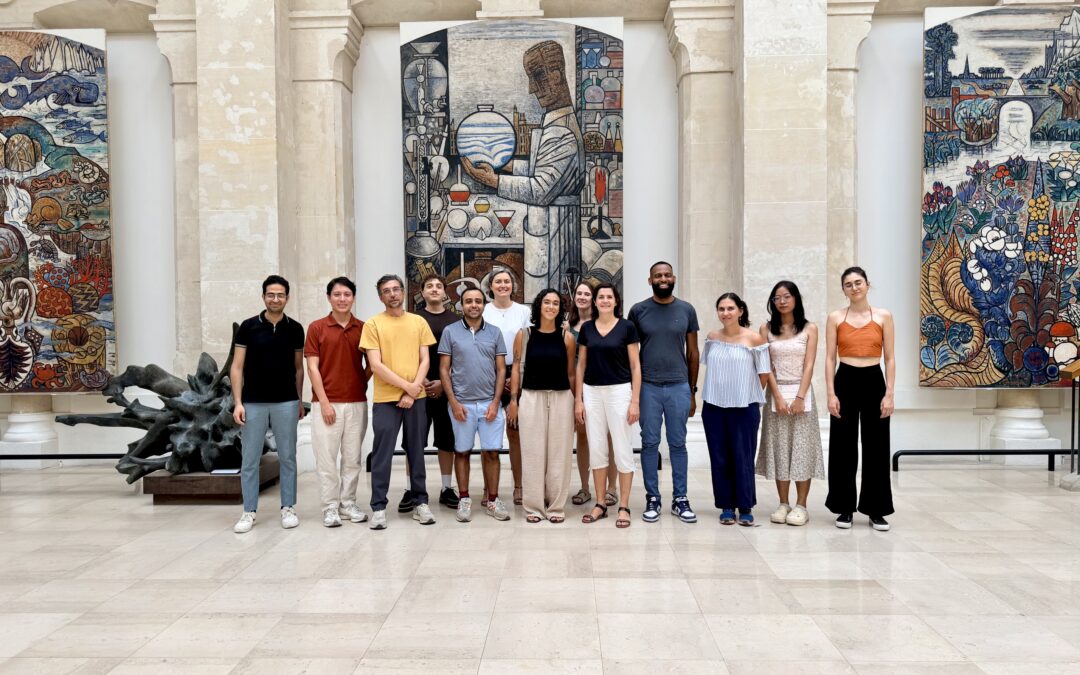
July 2026 – Presentation of Julieta Ribotta’s work to the team
On July 13, 2026, Julieta RIBOTTA, a doctoral student in biomedical engineering at the National University of Córdoba in Argentina, visited UTCBS to establish initial contact for potential bilateral collaborations in the field of nanomedicines. Julieta took the...

May 2026 – Defense of Céline Hoffmann’s thesis for the qualification to supervise research
May 2026 – Defense of Céline Hoffmann’s thesis for the qualification to supervise research Lire la suite May 2026 – Defense of Céline Hoffmann’s thesis for the qualification to supervise research
May 2026 – Anna Schreiber, a doctoral student at UTCBS, will participate in the Pint of Science festival
May 2026 – Anna Schreiber, a doctoral student at UTCBS, will participate in the Pint of Science festival Lire la suite May 2026 – Anna Schreiber, a doctoral student at UTCBS, will participate in the Pint of Science festival
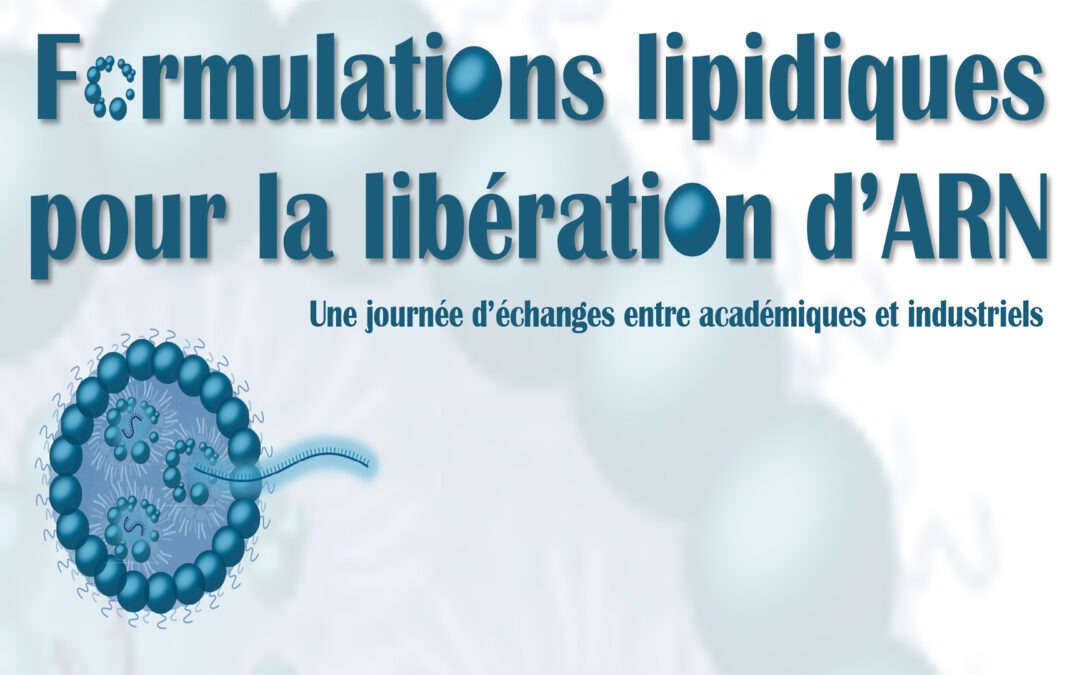
April 2026 – The second conference on lipid nanoparticles for RNA delivery was a resounding success
The second conference on lipid nanoparticles for RNA delivery was a resounding success Lire la suite April 2026 – The second conference on lipid nanoparticles for RNA delivery was a resounding success